


Table of Contents
- What Military-Grade Gear Actually Means
- Mil-Spec vs. Civilian Gear: Where the Real Differences Are
- The Lowest Bidder Problem: Why Military Contracts Don't Always Mean Superior Quality
- How to Evaluate Outdoor Gear Quality Beyond the Label
- Benefits of Military Surplus Gear for Outdoor Use
- Military-Grade Gear vs. Budget Alternatives: Cost-Benefit Reality
- When Military-Grade Gear Makes Sense, and When It Doesn't
- Frequently Asked Questions
Last Updated: September 28, 2026
What Military-Grade Gear Actually Means
"Military-grade" has no legal definition and isn't regulated, it's a marketing label that can mean anything from "meets military specifications" to "we think soldiers would like it."
Real military-grade gear follows mil-specs: detailed technical requirements for materials, construction, durability, and performance. A mil-spec tent must meet specific waterproofing standards; a mil-spec fabric must withstand abrasion resistance tests. These standards exist because military procurement demands equipment that works under extreme conditions where failure isn't an option.
Meeting a mil-spec doesn't automatically make gear better for civilian use. A military tent designed for rapid deployment has different priorities than a backpacking tent designed for comfort. Military specifications optimize for durability and rapid setup, not necessarily for civilian features.
Mil-Spec vs. Civilian Gear: Where the Real Differences Are
The gap between mil-spec and civilian gear comes down to engineering priorities. Mil-spec gear is engineered for specific performance metrics under defined conditions; civilian gear is engineered for market demand.
Military specifications demand measurable durability: mil-spec fabrics must meet abrasion resistance standards, seams must withstand tensile strength tests, and waterproofing must hold under pressure. These are pass-or-fail requirements. Civilian gear often skips formal tests, relying instead on field reputation and customer reviews.
Civilian gear wins in other areas: backpacking tents prioritize weight and packability; hunting vests focus on comfort with padding and ergonomic design. Military gear prioritizes functionality and ruggedness over comfort because soldiers carry what they're issued.
The durability difference is real but context-dependent. Military gear typically lasts longer under harsh conditions, but "longer" doesn't always mean "better for your use case." A civilian tent rated for 10 years might outlast your actual needs; a military tent rated for 20 years might be overkill and heavier for weekend trips.
The Lowest Bidder Problem: Why Military Contracts Don't Always Mean Superior Quality
The U.S. military doesn't always buy the best gear, it buys gear that meets specifications at the lowest cost, a principle written into federal procurement law.
Military contracts go to the manufacturer that meets mil-specs at the lowest price. This creates a perverse incentive: build to the minimum standard, not beyond it. If a mil-spec requires 500-pound tensile strength, you engineer for exactly 500 pounds, not 600, because that costs more and doesn't win the contract.
Mil-specs define minimums, not ideals. Gear can meet military specifications and still be mediocre. Meanwhile, premium civilian manufacturers often exceed civilian standards because they're competing on reputation.
Military surplus gear is a bargain because the military bought it at contract price. Once surplus, it sells at a fraction of original cost. But that doesn't make it superior to modern civilian alternatives, it makes it inexpensive.
Real-world field conditions matter more than specifications suggest. A tent that passes mil-spec waterproofing tests might still leak if pitched wrong or if seams fail under stress the test didn't simulate. Civilian gear tested by thousands of real users often reveals failure modes that laboratory testing misses.
How to Evaluate Outdoor Gear Quality Beyond the Label
Material science matters more than marketing terminology. Look at specific fabric weight (denier), weave pattern, and coating. A 200-denier ripstop with urethane coating behaves differently than 400-denier with polyurethane. Heavier isn't always better; it depends on your use case.
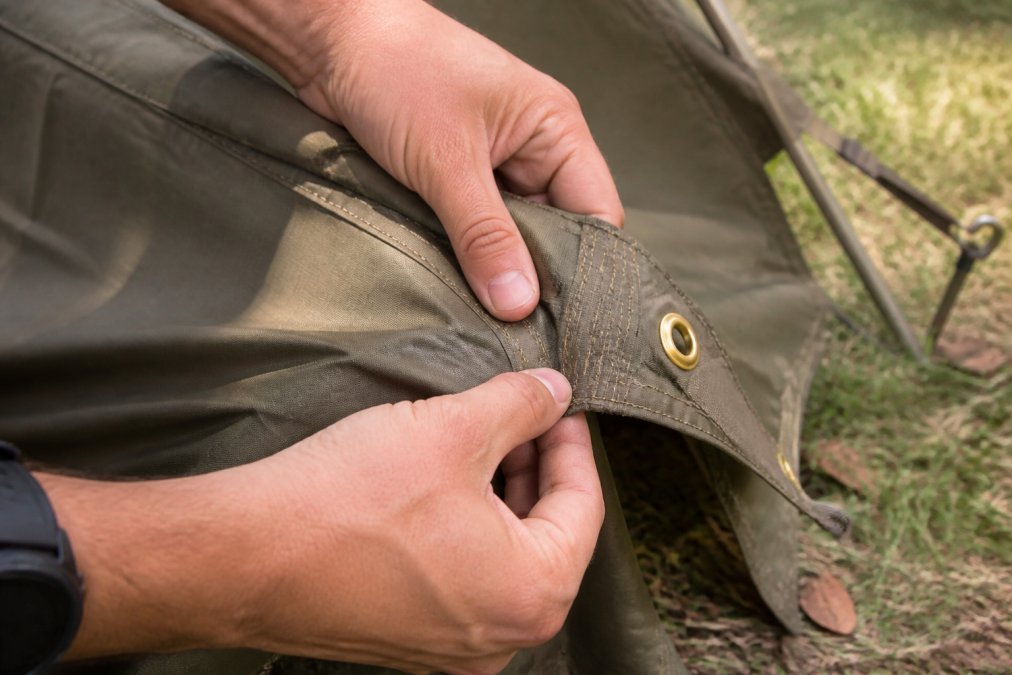
Seam construction separates durable gear from fragile gear. Look for taped seams (sealed with waterproof tape after stitching). Gear with only stitched seams will leak eventually. More stitches per inch mean stronger seams, but only if the thread is appropriate for the material.
Hardware tells a story. Brass or stainless steel resists corrosion; zinc-plated hardware oxidizes and fails. Riveted hardware is stronger than sewn. Military gear typically uses riveted hardware; budget gear uses sewn.
Weight-to-durability ratio is the metric that matters. A 3-pound tent lasting 15 years is more valuable than a 2-pound tent lasting 5 years for backpacking. A 5-pound tent lasting 20 years might be perfect for base camp. The math changes based on your use case.
Dragoon Unlimited Ridgeback One Person →
Field testing matters more than laboratory testing. Look for gear with extensive user reviews from people who've used it in conditions matching your needs. Military gear tested by soldiers in combat zones has passed the ultimate field test; civilian gear tested by thousands of backpackers has also passed a real-world test.
Benefits of Military Surplus Gear for Outdoor Use
Military surplus gear offers genuine advantages: it's field-tested by the harshest users, affordable because the military bought it at contract prices, and available in large quantities.
Surplus gear has proven durability. If it's still available decades after manufacture, it survived actual use, better validation than any laboratory test. A surplus poncho liner from the 1990s that's still functional proves the design works.

The cost advantage is substantial. Military surplus gear costs a fraction of new civilian equivalents because there's no retail markup. A surplus tent costing $50 and lasting 10 years beats a new tent costing $200 and lasting 8 years, if it meets your needs.
Surplus gear appeals to veterans who recognize equipment they used. Familiarity reduces the learning curve since you already know how to set up, pack, and maintain it.
Surplus gear has real limitations: it's designed for military priorities, not civilian comfort; it's often heavier than modern alternatives; it may lack ventilation or ergonomic design; and availability is unpredictable.
Military-Grade Gear vs. Budget Alternatives: Cost-Benefit Reality
Here's where the math gets interesting. Military-grade gear costs more upfront. Budget gear costs less. The question is whether the durability difference justifies the price gap.
A quality military-spec tent might cost $150 to $200. A budget civilian tent might cost $60 to $80. The military-grade tent might last 15 years with proper care. The budget tent might last 4 to 6 years. Over 15 years, the military-grade tent costs roughly $10 to $13 per year. The budget tent costs $10 to $20 per year (because you're replacing it twice). The math is close.
But the calculation changes based on use intensity. If you use the tent once a year for a weekend trip, a budget tent might last your lifetime. You're not stressing the gear enough to break it. Military-grade durability becomes unnecessary expense. If you use the tent 50 times a year for serious expeditions, military-grade durability pays for itself because budget gear fails under stress.
This applies to all outdoor gear. A military-spec poncho liner costs $70. A budget outdoor blanket costs $20.
| Gear Type | Budget Option | Military-Grade | Best For |
|---|---|---|---|
| Tent | $60-80, 4-6 years | $150-200, 15+ years | Casual use vs. intensive use |
| Poncho Liner | $20-30, 2-3 years | $70, 10+ years | Occasional vs. frequent |
| Binoculars | $50-80, 2-4 years | $160+, 15+ years | Hobby vs. professional |
| Hunting Vest | $40-60, 3-5 years | $90, 10+ years | Occasional vs. serious hunters |
When Military-Grade Gear Makes Sense, and When It Doesn't
Military-grade gear makes sense when durability is non-negotiable. If you're building a bug-out bag for emergency preparedness, you need gear that works when it matters most. Failure isn't an option. Military-grade equipment is engineered for that scenario.

Frequently Asked Questions
Why is military-grade gear so expensive compared to civilian outdoor equipment?
Military-grade gear costs more due to stricter manufacturing standards, durability testing, and field-proven performance metrics. The price reflects abrasion resistance, tensile strength, and longevity expectations built into specifications. However, premium pricing doesn't always guarantee better real-world performance, sometimes you're paying for the label, not the actual durability advantage.
What's the difference between mil-spec and military-grade gear?
Mil-spec (military specification) refers to gear that meets documented government standards for materials, construction, and performance testing. Military-grade is marketing terminology with no legal definition, it can mean anything from surplus stock to civilian gear marketed with military branding. True mil-spec gear has measurable specifications; military-grade does not. When evaluating outdoor gear quality, look for actual specifications (tensile strength, waterproof ratings, seam tape details) rather than generic military claims.
Is military surplus gear actually cheaper and worth buying?
Military surplus gear offers genuine value if you understand what you're getting. Surplus items are typically field-tested, built to durability standards, and often cost 40-60% less than new commercial equivalents. The trade-off: limited color options, potential wear marks, and no manufacturer warranty. Surplus works well for preppers and hunters seeking proven durability on a budget. Choose based on your tolerance for cosmetic wear and need for warranty coverage.
How do I know if outdoor gear will actually hold up in real field conditions?
Evaluate outdoor gear quality by checking three things: material specifications (ripstop fabric weight, seam tape type, hardware grade), construction details (how many stitches per inch, whether seams are taped), and real-world testing claims. Look for gear tested by users in actual conditions, not just lab tests. The Ridgeback tent, for example, specifies UV-resistant ripstop fabric, taped seams, and bathtub-style waterproof floors. Read reviews from people using gear in harsh environments, not fair-weather campers. Avoid vague claims like 'heavy-duty' or 'rugged' without backing specifications.
Is military-grade gear worth the extra cost if I'm just a casual camper or hiker?
For casual use, military-grade gear is often overkill and not worth the premium. A casual camper needs reliable shelter and weather protection, but doesn't need field-tested durability or mil-spec standards. Budget civilian gear performs fine for occasional trips. Military-grade becomes worth the cost when you're in harsh environments regularly, need gear to work reliably under stress, or want equipment that lasts decades. Veterans, preppers, hunters, and backcountry users justify the expense through durability and performance in demanding conditions.


