


Table of Contents
- Why Breathable Rain Gear Matters in Humid Conditions
- The Best Breathable Rain Jacket for Hiking
- Rain Jacket vs. Poncho for Hiking in Humid Weather
- Pit Zips for Rain Jackets: When Ventilation Matters Most
- How to Stay Cool in Rain Gear Without Overheating
- Essential Features: Hood Design, Zippers, and Pockets
- Field-Tested Durability and Care for Long-Term Performance
- Frequently Asked Questions
Last Updated: October 11, 2026
Why Breathable Rain Gear Matters in Humid Conditions
When you're hiking in humid weather, standard waterproof jackets trap moisture inside. Your sweat builds up faster than it can escape, leaving you soaked from the inside out. Breathable rain gear solves this problem by letting moisture vapor pass through while blocking liquid water.
The challenge isn't just staying dry from rain. It's managing the sweat your body produces during exertion. A jacket that doesn't breathe turns into a sauna within minutes. Breathable rain gear uses specialized membranes and fabrics that allow water vapor to escape while keeping rain out. This balance is critical in humid climates where moisture is already thick in the air.
Humidity changes everything about rain gear performance. In dry climates, a jacket just needs to block water. In humid regions, it needs to actively move moisture away from your skin while you're working hard. This is why breathability ratings matter more in warm weather than in cold. Your body generates heat and sweat that has nowhere to go in a non-breathable shell.
The Best Breathable Rain Jacket for Hiking
A quality breathable rain jacket for hiking balances three things: waterproof protection, moisture vapor transmission, and weight. The best options use waterproof-breathable membranes that handle both sustained rain and active ventilation.
Waterproof-Breathable Membranes and How They Work
Waterproof-breathable membranes use tiny pores that are smaller than water droplets but larger than water vapor molecules. This allows sweat vapor to escape while blocking liquid rain. The most common membranes include polyurethane and proprietary blends that manufacturers develop to improve breathability without sacrificing durability.
The hydrostatic head rating tells you how much water pressure the fabric can withstand before leaking. Most breathable jackets rate between 10,000 and 20,000 mm. That's more than enough for heavy rain. Moisture vapor transmission rate (MVTR) measures how much water vapor passes through per 24 hours. Higher numbers mean better breathability.
Weight, Packability, and Field Performance
Lightweight rain jackets pack down small, which matters when you're carrying gear all day. Most quality breathable jackets weigh between 8 and 14 ounces. Heavier options offer more durability and features like pit zips. Lighter versions sacrifice some ventilation but take up minimal pack space.
Field performance depends on how well the jacket handles real conditions. Seams need to be taped to prevent water from seeping through stitching. Zippers should be water-resistant. The hood should adjust without pulling the jacket off balance. These details separate jackets that work in theory from ones that actually keep you comfortable on the trail.
Rain Jacket vs. Poncho for Hiking in Humid Weather
A rain jacket, poncho, umbrella, and rain skirt each excel in different conditions. Choosing the right tool for humid hiking depends on terrain, wind exposure, pack coverage, and how much ventilation you need.
Breathable Rain Jacket
Best for: Technical terrain, sustained climbing, windy conditions, and fast-paced hiking.
A jacket offers mobility and protection while keeping your hands free. The breathable membrane actively moves sweat vapor outward, especially when you're generating heat. Pit zips add active ventilation when you need it most. The jacket keeps your pack dry and lets you move without managing extra fabric.
Trade-off: Jackets trap some heat and moisture near your torso, even with pit zips open. On very warm days with light rain, you may feel clammy if the outside air is too humid to accept vapor transmission.
Poncho
Best for: Slow movement, long breaks, sitting still, and maximum ventilation in warm, humid air.
A poncho covers more area and allows air to circulate freely underneath, which reduces condensation buildup. It protects your pack and lower body without the weight of a full rain suit. Many hikers carry a lightweight poncho for camp or lunch breaks when they're stationary and generating less sweat.
Trade-off: You sacrifice the ability to layer effectively, move through tight brush, or navigate technical terrain. Fabric flaps around your legs and can tangle on branches. Ponchos don't work well in wind. If you're climbing or moving fast, a poncho becomes a liability.
Umbrella
Best for: Gentle terrain, low wind, and situations where you want maximum head and shoulder cooling.
An umbrella keeps rain off your head and shoulders while allowing full-body ventilation. It's lightweight and packs small. In humid conditions with no wind, an umbrella lets air flow freely while protecting you from rain. It works well on wide, flat trails or when you're moving slowly.
Trade-off: An umbrella requires a free hand. It doesn't protect your pack, lower body, or arms. It fails in wind. It's not suitable for technical terrain or sustained climbing.
Rain Skirt or Pants
Best for: Protecting your lower body and pack in sustained rain, especially on longer hikes.
Rain pants or a rain skirt (a lightweight wrap that covers your legs and pack) keep your lower body and gear dry. Many hikers pair a breathable rain jacket with rain pants for complete coverage. In humid conditions, the jacket handles upper-body ventilation while the pants shield your legs and pack from water and wind.
Trade-off: Rain pants add weight and bulk. They're less breathable than jackets because your legs generate less heat. On warm days, they can feel restrictive. A rain skirt is lighter and more packable but offers less protection and durability.
Decision Framework for Humid Conditions
Warm, humid, technical terrain with sustained climbing: Breathable rain jacket with pit zips.
Sign Up For Our Newsletter for 10% OFF →
Warm, humid, gentle terrain with frequent stops: Poncho or lightweight rain jacket. If you're moving slowly and stopping often, the poncho's ventilation advantage outweighs the jacket's mobility benefit.
Warm, humid, open terrain with light rain: Umbrella plus rain pants or skirt. Maximum ventilation for your upper body, with lower-body protection. Works only if wind is minimal.
Warm, humid, all-day rain on any terrain: Breathable jacket plus rain pants. This is the complete system.
Warm, humid, high wind: Breathable rain jacket only. Wind negates the benefits of ponchos and umbrellas.
Pit Zips for Rain Jackets: When Ventilation Matters Most
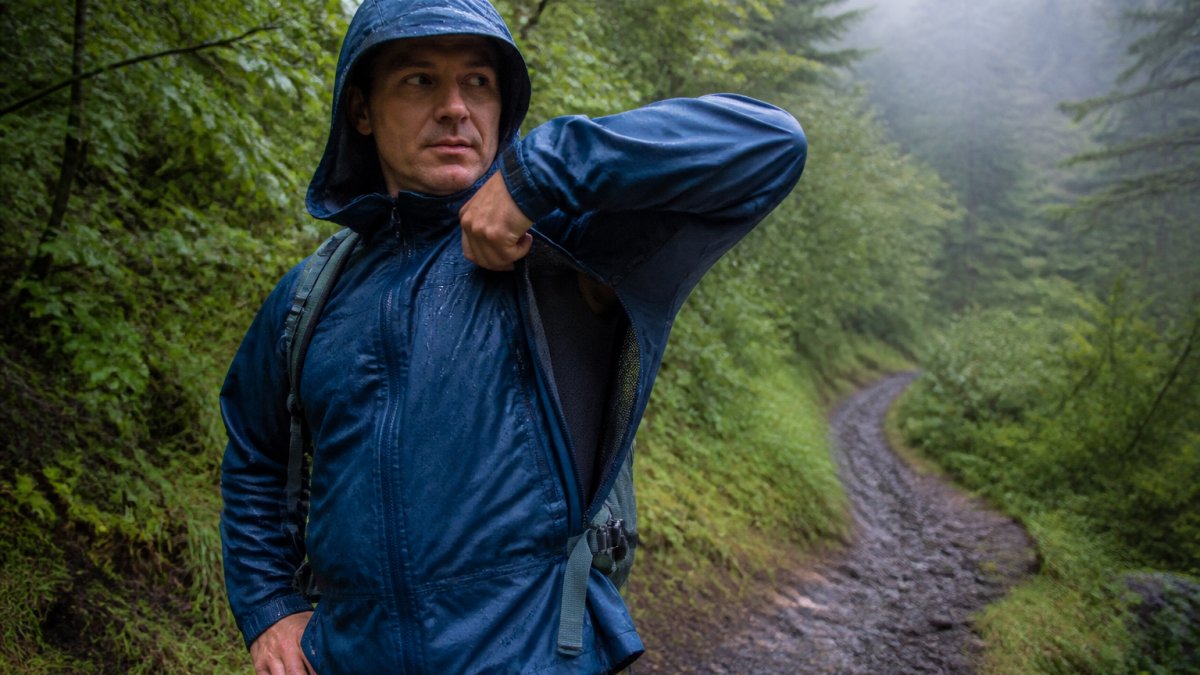
Pit zips (underarm zippers) are small vents under the arms that open to release heat and moisture. They're one of the most effective features for managing sweat in humid conditions. When you're climbing a steep section and generating serious heat, opening pit zips drops your core temperature fast.
The tradeoff is weight and complexity. Pit zips add seams that need taping and zippers that can fail. A jacket with pit zips costs more and weighs slightly more than a simpler design. But if you're hiking in warm, humid weather with sustained elevation gain, pit zips earn their weight. They let you control ventilation without removing the jacket.
How to Stay Cool in Rain Gear Without Overheating
The strategy for staying cool in rain gear is layering and ventilation control. Start with a moisture-wicking base layer that pulls sweat away from your skin. Add a breathable mid-layer if temperatures are cool. Top it with your breathable rain jacket. This system lets sweat move through each layer instead of pooling.
Layering Strategy for Warm, Wet Conditions
In warm weather, skip heavy insulation. A thin synthetic or merino wool base layer works well. Merino wool regulates temperature and resists odor even when wet. Synthetic materials dry faster. Avoid cotton, which holds moisture and loses insulating properties when damp.
Your rain jacket is the outer shell. Keep it on even if it feels warm. The breathable membrane is doing the work of moving moisture out. Removing the jacket exposes your layers to direct rain and wind. Unzip vents instead. Open pit zips. Let air move through the system. This keeps you dry from rain while allowing sweat to escape.
Managing Sweat and Moisture Vapor
The key is keeping moisture moving. Moisture that sits against your skin cools you down and creates discomfort. A breathable jacket moves that vapor outward. But you have to maintain airflow. Tight clothing traps moisture. Loose, breathable layers let air circulate.
Take breaks in shaded spots when possible. Stopping in direct sun heats you up and increases sweat production. If you're soaked through, change your base layer during lunch. Wet fabric against your skin is a heat loss risk, especially when you start moving again and wind cools you down.
Essential Features: Hood Design, Zippers, and Pockets
A good hood stays in place without pulling your head back. It should adjust with a drawstring or elastic that doesn't restrict vision. The hood should fit over a helmet if you wear one. Water-resistant zippers prevent water from running down the zipper track into your jacket. Look for zippers with storm flaps that cover the track.
Pockets matter more than people think. You need places to stash a map, phone, or snacks without removing your backpack. Hand pockets should be positioned so you can reach them while wearing a pack. Chest pockets work well for frequently accessed items.
Field-Tested Durability and Care for Long-Term Performance
Breathable rain gear lasts longer when you care for it properly. Wash your jacket in cool water with mild soap. Avoid fabric softener, which clogs the pores in the membrane.
Store your jacket in a dry place. Don't compress it tightly for months at a time. Fold it loosely or hang it. Check seams and zippers before each trip. Small tears and stuck zippers get worse fast in the field.
The membrane inside your jacket is what makes it breathable. Protect it by avoiding sharp branches and rough handling. A jacket that's been abused loses breathability before it loses waterproofing.
| Feature | Why It Matters | Priority in Humid Conditions |
|---|---|---|
| Waterproof-breathable membrane | Blocks rain while releasing sweat vapor | Critical |
| Pit zips or underarm vents | Active heat and moisture release | High |
| Taped seams | Prevents water from seeping through stitching | Critical |
| Water-resistant zippers | Stops water running down the zipper | High |
| Adjustable hood | Stays in place without restricting movement | Medium |
| Lightweight construction | Reduces fatigue and pack weight | Medium |
Frequently Asked Questions
What makes breathable rain gear different from regular waterproof jackets?
Breathable rain gear uses waterproof-breathable membranes that allow moisture vapor from sweat to escape while blocking liquid water. Regular waterproof jackets trap moisture inside, causing you to overheat and feel clammy. In humid hiking conditions, this ventilation difference is critical, breathable membranes maintain comfort during sustained exertion by letting sweat evaporate rather than pooling beneath the shell.
Are pit zips for rain jackets worth it for humid hiking?
Yes, pit zips are highly valuable in humid conditions. They provide rapid airflow to your core and armpits, the areas where sweat accumulates fastest during exertion. On sustained climbs or in warm, wet weather, open pit zips can reduce overheating significantly. They're especially useful when the rain is light or intermittent, letting you vent excess heat without removing the jacket entirely.
Should I choose a rain jacket or poncho for hiking in humid weather?
Rain jackets offer better mobility, fit, and layering compatibility for active hiking. Ponchos provide superior ventilation and coverage for your pack, making them ideal if you're stationary or moving slowly in heavy rain. For humid conditions where you're climbing or maintaining steady pace, a rain jacket with pit zips outperforms a poncho because it allows controlled ventilation while keeping you mobile. Choose a poncho if airflow and pack coverage are your top priorities.
How do I prevent overheating while wearing rain gear on humid trails?
Layer strategically with moisture-wicking base layers and avoid heavy insulation under your rain jacket. Use pit zips and open vents aggressively during climbs. Take breaks in shade to let sweat evaporate. Consider a rain jacket with high moisture vapor transmission rating (MVTR) for better sweat management. In very humid conditions, some hikers use a lightweight rain skirt paired with a breathable upper layer for greater flexibility than a full jacket.
Staying comfortable in humid rain requires gear that actually breathes, not just promises to. Dragoon Unlimited builds breathable rain gear tested in real conditions, designed with input from hikers and outdoor enthusiasts who understand what fails when it matters. Our field-tested approach means every feature serves a purpose. Get started with gear that keeps you dry from rain and cool from sweat, and join a community of adventurers who demand reliability in the toughest conditions.


