


Table of Contents
- What Makes Ripstop Fabric Essential for Camping Gear
- Understanding Tent Fabric Denier and Tear Strength
- Waterproof Ripstop Fabric: Coatings and Hydrostatic Head
- Silnylon vs Silpoly: Which Coating Wins for Durability
- Ripstop Tarp Fabric: Weight, Abrasion Resistance, and Field Performance
- Common Mistakes When Selecting Ripstop for Your Mission
- Frequently Asked Questions
Last Updated: October 15, 2026
What Makes Ripstop Fabric Essential for Camping Gear
Ripstop fabrics camping represent a fundamental shift in how we think about durability in the backcountry. Traditional woven materials tear in straight lines when damaged, one small puncture unravels into a catastrophic failure. Ripstop construction interrupts that chain reaction by weaving thicker threads at regular intervals, creating a grid pattern that stops tears before they spread.
This matters because your shelter is your lifeline in the field. A compromised tent, tarp, or pack can turn a manageable situation into a genuine emergency. At Dragoon Unlimited, we've learned that ripstop fabrics aren't just a marketing term, they're a structural requirement for gear that has to perform when conditions deteriorate.
The reinforced weave pattern in ripstop materials works by design. When a tear encounters one of those heavier threads, it cannot continue in a straight line. The damage stops, contained. For camping applications, this translates directly to gear that survives sharp branches, rough handling, and the inevitable impacts of backcountry travel.
Understanding which ripstop option suits your specific mission requires knowing what you're comparing. Ripstop nylon and ripstop polyester dominate the market, each with distinct trade-offs in weight, water resistance, and long-term durability. The coating applied to the fabric, whether silnylon or silpoly, changes everything about how the material performs in wet conditions.
Understanding Tent Fabric Denier and Tear Strength
Denier measures the weight and thickness of individual fibers in a fabric. Higher denier means thicker threads and generally more durable material, but it also adds weight. A 20-denier ripstop nylon feels gossamer-thin and saves ounces in your pack. A 210-denier ripstop polyester feels substantial and can take serious abuse.
The relationship between denier and tear strength is not linear. A 40-denier ripstop with proper construction can outperform a poorly designed 70-denier fabric. What matters is the reinforcement grid, how frequently those heavier threads appear and how well they're integrated into the tight weave pattern.
Most camping tents sit in the 20-40 denier range for the canopy. This weight-to-durability balance makes sense: you want the shelter to shed rain and resist puncture without carrying unnecessary weight. Groundsheets and bathtub floors often use 40-70 denier for additional abrasion resistance against rocks and roots.
Tarps demand different specifications. A quality camping tarp typically runs 70-210 denier depending on intended use. Ultralight tarps stay near 70-100 denier. Heavy-duty tarps for base camps or extended deployments push toward 150-210 denier. The heavier material tolerates repeated setup and teardown cycles better than lighter alternatives.
Tear strength measured in pounds tells you how much force is required to propagate a tear through the fabric. A ripstop fabric with 50-pound tear strength in both directions means a 50-pound load applied to a tear will cause it to continue spreading. In practice, ripstop fabrics typically range from 40 to 100+ pounds of tear strength depending on denier and construction quality.
Waterproof Ripstop Fabric: Coatings and Hydrostatic Head
Ripstop fabric alone is not waterproof, it's just tightly woven. Water resistance requires a coating applied to the fibers. Hydrostatic head measures how much water pressure a coated fabric can withstand before leaking. The measurement is expressed in millimeters: a coating with 1000mm hydrostatic head will keep water out under 1000mm of water pressure.
Most camping applications demand at least 800mm hydrostatic head for the tent canopy. This provides margin for rain driven by wind and for water pooling at seams. Groundsheets benefit from higher ratings, 1200-1500mm, because they face direct contact with wet ground and standing water.
Silicone-based coatings (silnylon) and polyurethane-based coatings (silpoly) dominate the market. Silnylon uses silicone applied to the underside of nylon fabric. The result is a water-resistant surface that feels slightly rubbery and remains flexible in cold temperatures. Silnylon fabric typically achieves 1200-1500mm hydrostatic head with proper application.
Polyurethane coatings applied to polyester create silpoly. This approach offers excellent water resistance and durability. Silpoly can achieve similar or higher hydrostatic head ratings than silnylon, often 1500mm or more, depending on coating thickness. The trade-off is that polyurethane becomes stiffer in extreme cold, which matters if you're camping in winter conditions.
The coating itself requires maintenance. UV exposure degrades both silicone and polyurethane over time. Fabrics stored in direct sunlight deteriorate faster than those kept in shade. Water-resistant treatments applied to uncoated ripstop (like DWR finishes) offer less protection than factory coatings but add water repellency without the weight penalty of full silicone or polyurethane layers.
Silnylon vs Silpoly: Which Coating Wins for Durability
This comparison reveals where most campers make their decision incorrectly. They choose based on cost or weight alone, ignoring the actual performance differences that matter in the field.
Silnylon consists of nylon fabric with silicone applied to the underside. The silicone coating creates a slick, water-repellent surface. Silnylon fabric remains flexible even at freezing temperatures, which is critical for winter camping or alpine missions. The material is lighter than equivalent silpoly options because silicone coating adds less weight than polyurethane.
Silnylon's weakness emerges over time. Silicone coating can degrade under UV exposure and can develop small cracks if flexed repeatedly in the same locations. Repairs to silnylon require special tape or patches designed for silicone surfaces, standard duct tape won't stick reliably.
Silpoly uses polyester fabric with polyurethane coating. Polyurethane is tougher and more resistant to UV damage than silicone. Silpoly fabric typically lasts longer in high-use scenarios because the coating resists puncture and abrasion better. Repairs are straightforward, standard repair tape works on polyurethane-coated fabrics.
The trade-off is weight and cold-weather performance. Silpoly is heavier than silnylon for equivalent hydrostatic head. In extreme cold, polyurethane coating becomes stiff and can crack if the fabric is flexed aggressively. This matters less for summer camping but becomes significant above 8,000 feet or in winter conditions.
Sign Up For Our Newsletter for 10% OFF →
For most camping applications, silpoly wins on durability and ease of repair. For ultralight backpacking or winter mountaineering, silnylon's weight advantage and cold-weather flexibility make it the better choice. The real decision is matching the coating type to your actual mission profile, not picking the cheaper option.
Ripstop Tarp Fabric: Weight, Abrasion Resistance, and Field Performance
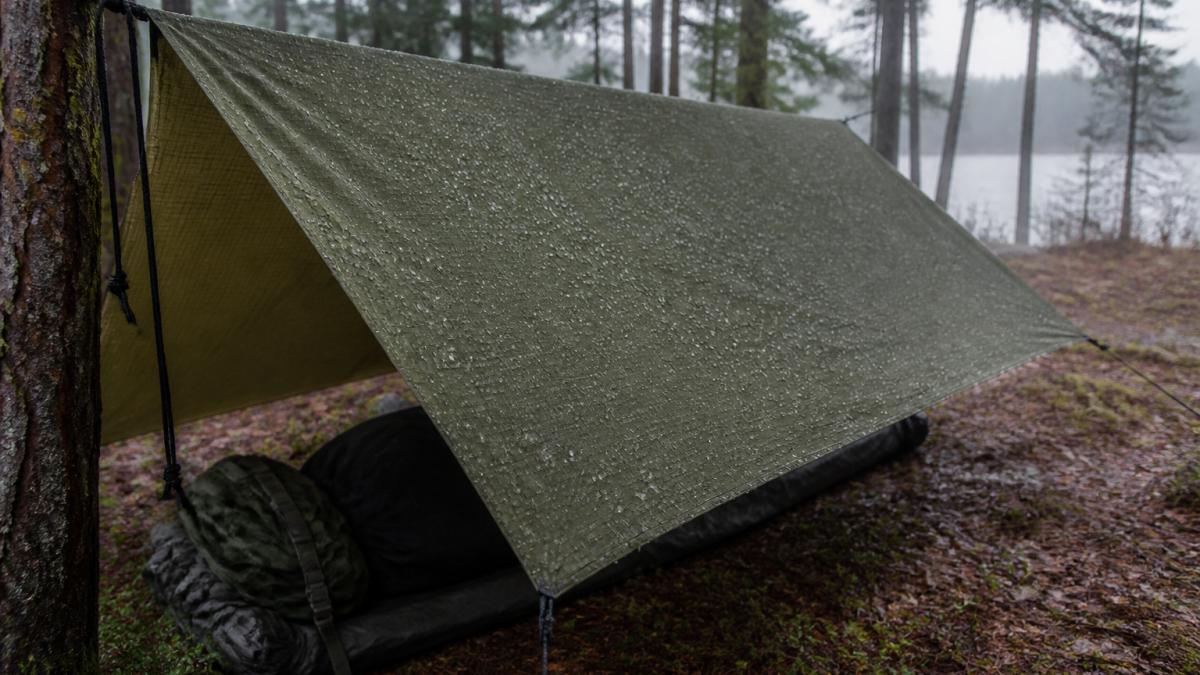
When selecting ripstop fabrics camping, a tarp is not a tent. It's a multipurpose shelter system that requires different specifications. Tarp fabric must tolerate repeated setup and teardown cycles, direct contact with ground and vegetation, and exposure to branches and sharp objects. These demands push tarp fabric toward heavier denier weights and more strong construction.
The best ripstop tarp fabric for camping sits in the 70-150 denier range. Lighter tarps (70-100 denier) work for ultralight systems where you're willing to accept increased vulnerability in exchange for weight savings. Standard camping tarps (100-150 denier) represent the practical balance, durable enough for frequent use while remaining packable. Matching this level of resilience in your shelter system often necessitates a similar focus on the construction of durable sleeping bags to ensure your entire kit withstands the rigors of the backcountry.
Abrasion resistance in ripstop fabric depends on the tight weave pattern and the coating thickness. A dense, tight weave resists abrasion better than a loose one. Thicker coatings provide more protection against ground contact and rough handling. The reinforced grid pattern in ripstop construction also contributes, those heavier threads provide additional abrasion resistance at regular intervals across the fabric.
Weight matters because you're carrying the tarp. A 100-denier tarp in a 10-by-10-foot size weighs roughly 14-18 ounces depending on coating. A 150-denier version of the same size weighs 20-25 ounces. For extended backpacking trips, those ounces accumulate. For base camp or vehicle camping, the additional durability of heavier fabric justifies the weight.
Field performance data from actual campers reveals that 100-150 denier ripstop tarps survive without significant degradation. Lighter 70-denier tarps typically show visible wear. The difference is not just cosmetic, worn fabric loses water repellency and becomes more prone to small tears that develop into larger failures.
Ripstop tarp fabric also benefits from reinforced grommets and stitched edge hems. The fabric itself is only part of the system. Seams and attachment points are where most tarps fail in practice. A tarp with excellent ripstop fabric but poor seam construction will disappoint in the field.
Common Mistakes When Selecting Ripstop for Your Mission
Most campers choose ripstop fabric based on price or brand reputation rather than actual specifications. This is the first mistake. A $40 tent made from 20-denier ripstop nylon might fail where a $120 tent with 40-denier ripstop polyester would survive. The cheaper option feels like a win until it tears at 12,000 feet.
The second mistake is confusing ripstop with waterproof. Ripstop is a construction technique that prevents tears from spreading. Waterproofing requires a separate coating. A ripstop fabric without adequate hydrostatic head rating will shed light rain but fail under sustained moisture or pooling water. Check the coating specifications, not just the ripstop label.
Underestimating abrasion requirements is the third common error. Campers often select tent fabric based on weight alone, forgetting that your shelter will contact rocks, roots, and rough ground. Ultralight fabric (20-30 denier) is appropriate for pristine alpine meadows but fails quickly in rocky terrain or high-traffic campsites. Match the denier weight to your typical environment.
Many campers also ignore the difference between nylon and polyester ripstop. Nylon is more flexible and lighter but less durable over time. Polyester is heavier but tougher. Neither is universally better, the right choice depends on whether you prioritize weight or longevity.
Finally, neglecting maintenance accelerates fabric degradation. UV exposure, improper storage, and deferred repairs all shorten the lifespan of ripstop gear. A tarp stored in direct sunlight ages faster than one kept in a shade. Small tears that could be patched in five minutes become structural failures if ignored for months.
Choosing the right ripstop fabric for camping comes down to matching specifications to your actual mission. Denier weight determines durability. Tear strength and reinforcement grid pattern determine how well the fabric resists puncture and abrasion. Coating type, silnylon versus silpoly, determines water resistance and cold-weather performance.
| Fabric Type | Typical Denier | Best For | Tear Strength | Cold Weather |
|---|---|---|---|---|
| Ripstop Nylon | 20-40 | Ultralight tents | 40-60 lbs | Excellent |
| Ripstop Polyester | 40-100 | Standard tents | 60-100 lbs | Good |
| Heavy Ripstop Poly | 100-210 | Tarps, groundsheets | 80-120 lbs | Fair |
| Silnylon Coated | 30-50 | Winter camping | 50-80 lbs | Excellent |
| Silpoly Coated | 50-100 | High-use gear | 70-110 lbs | Good |
According to outdoor fabric durability standards, ripstop construction with proper reinforcement grid spacing reduces tear propagation by 60-80% compared to standard weaves. Understanding hydrostatic head ratings helps you match fabric protection to your environment, research from tent fabric performance testing shows that 1000mm hydrostatic head provides adequate protection for most camping applications, while 1500mm+ is recommended for ground contact surfaces.
Frequently Asked Questions
What does denier mean in ripstop fabric?
Denier measures fabric weight by the mass of a 9,000-meter thread strand. Higher denier (like 210D or 400D) means thicker, heavier, more durable fabric. Lower denier (70D to 100D) is lightweight and packable but less abrasion-resistant.
Is ripstop fabric waterproof?
Ripstop fabric itself is not waterproof, it's just a weave pattern. Water resistance comes from coatings like silicone or polyurethane applied to the fibers. A fabric with a silicone or polyurethane coating and hydrostatic head rating of 1,500mm or higher will repel water effectively. Check the coating type and hydrostatic head spec before buying; uncoated ripstop will absorb moisture and fail in rain.
What is the difference between silnylon and silpoly?
Silnylon (silicone-coated nylon) is stretchy and UV-resistant. Silpoly (silicone-coated polyester) is more UV-resistant. Choose silnylon for lightweight shelters, silpoly for long-term tarps and exposed gear.
Which ripstop fabric is best for camping tarps?
For camping tarps, choose polyester ripstop with silicone or polyurethane coating. Silpoly (silicone-coated polyester) resists UV damage and handles abrasion from rocks and branches. A hydrostatic head of 2,000mm or higher ensures water repellency.


