


Table of Contents
- Why Poncho Rain Gear Beats a Raincoat for Many Hikers
- Poncho vs Raincoat for Hiking: Coverage, Ventilation, and Packability
- Ultralight Backpacking Poncho: What to Look For in a Packable Shelter
- Waterproof Rain Poncho Durability: Materials, Seams, and Long-Term Care
- Multi-Functional Uses: Tarp Conversion, Emergency Shelter, and Gear Protection
- How to Choose Poncho Rain Gear for Urban Commuting vs. Wilderness
- Conclusion
- Frequently Asked Questions
Last Updated: September 10, 2026
Why Poncho Rain Gear Beats a Raincoat for Many Hikers
Poncho rain gear is a single-piece, loose-fitting rain shell that drapes over your body and pack, typically made from waterproof or water-resistant coated fabric. For many hikers, it outperforms a raincoat because it covers more surface area, vents better, and packs smaller. This guide breaks down what actually matters when you're choosing between the two.
Here's the core tension most buyers miss: a raincoat is designed to fit your torso. A poncho is designed to fit your torso and your pack and the gap between them. That difference decides almost everything else, including how dry you stay and how much you sweat.
The American Hiking Society's trail resource library notes that staying dry in the backcountry is as much about moisture management as it is about waterproof fabric. That's the argument for ponchos in a sentence.
Below, we'll show you exactly how coverage, ventilation, and packability compare, plus what to look for in materials and long-term care. The 5 sections that follow map the whole decision, from a day hike to a bug-out bag.
Poncho vs Raincoat for Hiking: Coverage, Ventilation, and Packability
A poncho wins on coverage and ventilation; a raincoat wins on fit and wind resistance. The right choice depends on your terrain, your pack size, and how much you move.
Coverage is the obvious gap. A raincoat stops at your hips. A poncho extends past your knees and over your pack, which means fewer wet straps and a dryer top layer underneath. Full-coverage designs also protect your gear without a separate pack cover.
Ventilation is where ponchos pull ahead in humid or warm conditions. Because the fabric hangs away from your body, air moves underneath and condensation has somewhere to go. Raincoats trap heat against your torso unless they have pit zips or a membrane that breathes.
Packability favors the poncho for most ultralight setups. A packable poncho folds into a fist-sized bundle and doubles as an emergency shelter or groundsheet, which a raincoat cannot do.
| Factor | Poncho | Raincoat |
|---|---|---|
| Coverage area | Full body plus pack | Torso only |
| Ventilation | High, open sides | Depends on pit zips |
| Packed size | Fist-sized | Bulky |
| Wind resistance | Lower | Higher |
| Multi-use | Tarp, shelter, groundsheet | Limited |
The one drawback of a poncho is wind. In exposed, gusty terrain, a loose shell flaps and can catch air. If your route is above treeline, a raincoat with a secure fit is the safer call.
Ultralight Backpacking Poncho: What to Look For in a Packable Shelter
The best ultralight backpacking poncho balances low weight against real coverage, and the deciding specs are denier, coating, seam construction, and how the poncho layers over a loaded pack. A poncho that's too thin will tear on a branch; one that's too heavy defeats the purpose.
Start with fabric weight and denier. Denier (D) measures the linear mass of the yarn, so a 15D ripstop nylon is dramatically lighter and less abrasion-resistant than a 70D polyester. Ultralight ponchos commonly land in the 7-12 oz range, while heavier multi-use shells run 16-24 oz. Lower denier means lighter fabric, but it also means less abrasion resistance. Ripstop weaves, the visible grid of thicker threads, slow a tear once it starts, which matters when you're brushing through scrub or sliding over rock.
Next, look at the coating and the fabric family:
- Silnylon (silicone-impregnated nylon): very light and strong for its weight, but it stretches when wet and can sag overnight if pitched as a shelter.
- Silpoly (silicone-impregnated polyester): slightly heavier than silnylon but far less sag, which matters if you're using the poncho as a tarp.
- PU-coated nylon or polyester: fully waterproof and inexpensive, but heavier and non-breathable; condensation builds up inside.
- DWR-treated face fabric: sheds rain and lets some vapor escape, but it is water-resistant, not waterproof, on its own. Most quality ponchos combine a waterproof coating on the inside with a DWR treatment on the outside.
A hydrostatic head rating tells you how much water pressure a fabric resists before it leaks. For a poncho used as a shelter, look for a rating in the 1,500-3,000 mm range; a poncho used only as worn rain gear can get by with less (rei.com). Seam sealing matters as much as the coating, a stitched seam leaves needle holes that water finds, so taped or sealed seams are the single biggest durability upgrade you can look for.
Then check the details that decide field performance:
- Seam-sealed or taped seams, not just stitched
- A drawstring hood that cinches down in wind
- Snap closures along the sides to reduce flapping
- Grommets at the corners for tarp conversion
- A stuff sack that compresses small enough for a pack pocket
Layering a poncho over a pack without losing mobility. This is the part most guides skip. A poncho worn over a loaded backpack creates a large sail area, so the trick is to control where the fabric moves. Run the poncho's front hem under your hip belt and sternum strap so the shell is anchored to your torso rather than flapping free. Use the side snaps to close the poncho into a tube around your legs on windy ridgelines, or leave them open for maximum airflow on humid climbs. If your poncho has a rear grommet or loop, clip it to your pack's top lid so the back panel doesn't billow. For shoulder-strap chafe, a poncho worn under the pack straps but over the pack body keeps the shell from riding up while still covering your load, a pattern many thru-hikers settle on after a few wet days.
For a bug-out bag, weight matters less than durability. For a thru-hike, every ounce counts. Match the poncho to the mission.
Waterproof Rain Poncho Durability: Materials, Seams, and Long-Term Care
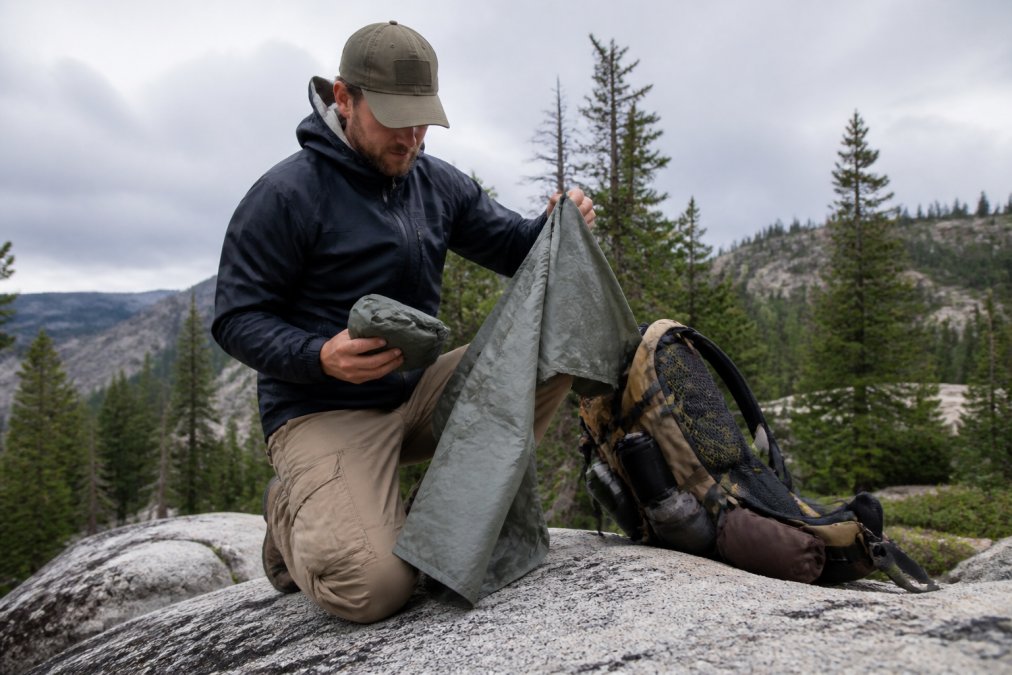
Waterproof rain poncho durability comes down to four things: the fabric's abrasion resistance, how the seams are sealed, how well you maintain the water-repellent finish, and whether you can repair it in the field. Most ponchos fail at the seams or the DWR, not the fabric itself, and the long-term maintenance angle is where most buying guides stop short.
Why seams fail. A stitched seam leaves needle holes that water finds. Seam-sealed or taped seams close those holes and are the single biggest durability upgrade you can look for. On a well-made poncho, look for a taped strip running the full length of every seam, not just the shoulders. If a seam starts to leak, a dab of seam grip or a strip of tenacious tape over the inside of the seam will usually stop it.
Why DWR fails, and how to bring it back. The DWR finish is the second failure point. It wears off with use, dirt, and repeated washing. When it goes, the outer fabric "wets out", water stops beading and instead soaks into the face fabric, which feels clammy even though the poncho is still waterproof underneath. The mechanism is simple: DWR is a surface treatment that lowers the fabric's surface energy so water beads and rolls off. Once oils, sunscreen, and grit coat that surface, the treatment can't do its job. Reapplying a spray-on or wash-in DWR treatment restores the beading and brings back breathability.
Re-waterproofing, step by step.
- Wash the poncho with a technical fabric cleaner, never detergent or fabric softener, which leave residues that block DWR.
- Rinse thoroughly and hang to dry.
- Apply a spray-on DWR (easier for localized touch-ups) or a wash-in DWR (better for full-coverage refresh).
- Tumble dry on low or warm, heat reactivates many DWR finishes and is often the step people skip.
- Test by dripping water on the fabric; if it beads, you're done. If it soaks in, repeat.
Field repair. A poncho that tears on a branch is not a lost cause. Tenacious tape or a peel-and-stick nylon patch on both sides of the tear will hold for the rest of a trip. For a pinhole or a small puncture, a drop of seam grip works. Carry a few inches of tape wrapped around a trekking pole or a lighter, it weighs almost nothing and has saved many a shell mid-trail.
Sign Up For Our Newsletter for 10% OFF →
Long-term care is simple but easy to skip:
- Rinse mud and grit off after trips, especially around the hem
- Wash with a technical fabric cleaner, never detergent or fabric softener
- Reapply DWR when water stops beading
- Store dry and loosely folded, not compressed for months
- Inspect seams and grommets before each season
A heavy-duty poncho treated this way can last many seasons. A neglected one can wet out in a single trip.
Multi-Functional Uses: Tarp Conversion, Emergency Shelter, and Gear Protection
A poncho earns its place in a pack because it does more than keep you dry. With grommets and a bit of cord, it converts into a tarp, an emergency shelter, or a groundsheet, which is why it belongs in any serious kit.
Tarp conversion is the headline use. Corner grommets let you string the poncho between two trees as a rain fly over a hammock or a sitting area. The same grommets let you stake it low as a windbreak or a sun shade.
Emergency shelter is the second use, and it's the one preppers care about most. A poncho pitched as a lean-to or an A-frame gives you a dry layer between you and the ground or overhead. It won't replace a dedicated shelter, but it buys time and keeps your core dry.
Gear protection is the third. Draped over a pack, a poncho keeps straps, zippers, and contents dry without a separate pack cover. In a downpour, that's the difference between a wet sleeping bag and a dry one.
The National Weather Service's outdoor safety guidance is blunt about hypothermia risk in wet, cold conditions. A multi-use shell that keeps you and your gear dry is a safety item, not a luxury.
For a bug-out bag or a hunting pack, a poncho that converts to a shelter does double duty and saves weight. That's the case for carrying one even when the forecast looks clear.
How to Choose Poncho Rain Gear for Urban Commuting vs. Wilderness
Poncho rain gear for commuting and poncho rain gear for the backcountry are different tools, and buying for one use case rarely serves the other well. Match the poncho to where you'll actually wear it.
For urban commuting, prioritize packability, quick on-off, and a clean look. You want something that stuffs into a bag, deploys in seconds at a bus stop, and doesn't flap into traffic. A lightweight, reusable poncho with snap closures and a compact stuff sack fits this role. Breathability matters here too, because you're often moving between a warm train and cold rain.
For wilderness use, prioritize durability, coverage area, and multi-function. You want seam-sealed construction, ripstop fabric, grommets for tarp conversion, and enough coverage to shelter you and your pack. Weight still matters, but abrasion resistance and weather protection come first.
Here's a quick decision framework:
- Commuting: lightweight, packable, snap closures, urban-friendly cut
- Day hiking: mid-weight, seam-sealed, drawstring hood, good ventilation
- Backpacking: ultralight, ripstop, tarp-capable, minimal packed size
- Emergency or bug-out: heavy-duty, full-coverage, shelter-capable, durable
If you only buy one, a mid-weight seam-sealed poncho with grommets covers the most ground. It's the compromise that works for most people.
At Dragoon Unlimited, we build gear the way we wished we'd had it in service: field-tested, community-driven, and made to hold up. Our Ridgeback shelters and Woobie gear come from the same philosophy, and we give 5% of our proceeds to veteran organizations.
Conclusion
Choosing the right poncho rain gear comes down to matching coverage, ventilation, and durability to your actual terrain, not the marketing copy. Get the seams, the coating, and the packed size right, and a single poncho can replace a raincoat, a pack cover, and an emergency tarp.
Dragoon Unlimited builds rugged, field-tested outdoor gear for people who need it to work when it counts. Our gear is designed with community input, tested in real conditions, and backed by a commitment to donate 5% of our proceeds to veteran organizations. Sign up for our newsletter for 10% off and gear that's built to withstand any mission.
Frequently Asked Questions
Are ponchos or raincoats better for hiking?
Ponchos offer superior ventilation and packability, making them ideal for humid or variable conditions. Raincoats provide better fit and wind resistance for exposed ridgelines. Many hikers carry a poncho rain gear setup as a backup or primary layer because it covers both the wearer and a backpack without adding much weight. The best choice depends on your climate, activity level, and how much coverage you need.
What are the disadvantages of using a rain poncho?
Ponchos can flap in high winds, which may reduce coverage or cause noise. They offer less arm mobility than a fitted raincoat, and cheaper models may lack durability for rugged terrain. Some users find the loose fit catches on brush. However, many of these issues are solved by choosing a poncho with snap closures, a drawstring hood, and ripstop fabric with a higher denier for abrasion resistance.
How do you choose a waterproof poncho for heavy rain?
Look for seam-sealed construction, a PU-coated or DWR-treated fabric, and a hydrostatic head rating suitable for sustained rain. A drawstring hood and snap closures prevent water entry. For heavy rain, prioritize full-coverage length and a design that allows ventilation to reduce condensation. Waterproof rain poncho durability depends on material quality and proper maintenance, including re-waterproofing over time.
Are military-style ponchos more durable than standard options?
Military-style ponchos typically use heavier denier ripstop nylon with reinforced grommets and snap closures, making them more resistant to tears and abrasion. They often convert into tarps or emergency shelters, adding multi-functional value. While they weigh more than ultralight backpacking poncho models, the durability and versatility appeal to preppers, hunters, and hikers who prioritize ruggedness over minimal weight.


