


Table of Contents
- Best Gear for Muddy Dog Hiking: 7 Trail-Ready Picks
- Essential Hiking Gear for Dogs in Mud
- Leash and Harness Systems That Handle Muddy Trails
- Dog Hiking Boots for Mud: Traction and Protection
- How to Clean Dog Paws After Hiking in Mud
- Portable Dog Paw Cleaner Options for the Trail
- Hydration, Waste Management, and Safety Gear
- Gear Maintenance After Muddy Hikes
- Frequently Asked Questions
Last Updated: September 20, 2026
Best Gear for Muddy Dog Hiking: 7 Trail-Ready Picks
Muddy trails test both you and your canine companion. Your dog's paws absorb moisture, dirt gets matted into fur, and gear designed for dry conditions fails fast. Finding the best gear for muddy dog hiking means choosing equipment that handles moisture, protects paws, and survives the cleanup that follows.
This guide covers the essentials: protective boots, harness systems that won't slip in mud, portable cleaning tools you can carry on the trail, and shelter options that keep both of you dry.
Quick Picks:
- Best Overall Protection: Dog hiking boots with aggressive tread and waterproof construction
- Best Harness System: Hands-free leash with quick-release collar for muddy terrain
- Best Paw Care: Portable dog paw cleaner that fits in a backpack
- Best Shelter: Lightweight tent with waterproof floor and fast setup
Essential Hiking Gear for Dogs in Mud
Protecting paws, joints, and skin from prolonged mud exposure and sharp debris is essential on muddy trails.
Muddy terrain softens paw pads, traps moisture between toes, and compromises temperature regulation. A good setup addresses all three hazards.
Choose waterproof, breathable gear, synthetics and wool shed water better than cotton. Harnesses need solid anchor points and quick-release mechanisms for safety.
Choose multi-purpose, packable items. A poncho liner, for example, works as both shelter and drying wrap.
Leash and Harness Systems That Handle Muddy Trails
Standard leashes become liabilities on muddy terrain, they tangle and lose grip when wet. Use a harness system designed for traction and control.
Hands-free leashes are best for muddy hiking, they free your hands for balance and gear management. Look for quick-release collars for emergency disconnection.
Harness fit is critical, loose harnesses rotate when wet. Measure carefully and ensure two fingers fit between fabric and skin. Adjustable straps let you tighten as needed.
Neoprene-lined harnesses grip better than bare nylon when wet. Use reflective trim for visibility and stainless steel hardware to prevent rust.
Test harnesses on dry trails first to avoid discovering fit problems on muddy terrain.
Dog Hiking Boots for Mud: Traction and Protection
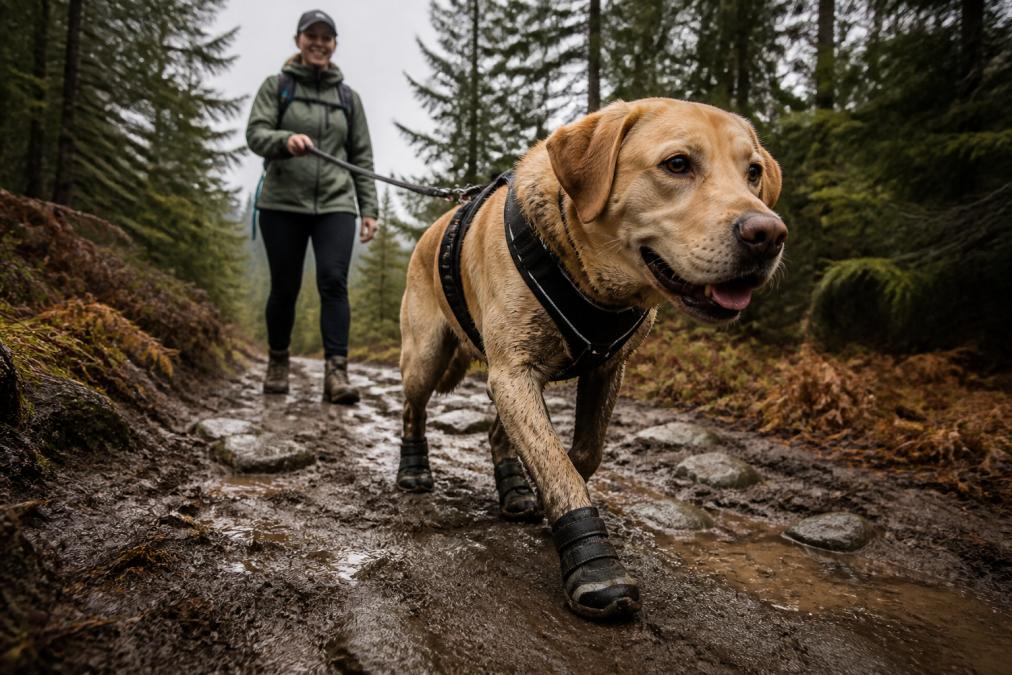
Dog boots are the single most important piece of gear for muddy dog hiking. Bare paws on slippery mud lose traction, and prolonged exposure to moisture invites infection. Good boots prevent both problems.
The best boots feature aggressive tread with deep lugs for wet grip. Test on wet surfaces before committing to a full set.
Neoprene stays flexible and resists punctures; synthetic leather works for moderate mud. Sealed seams are more reliable than material thickness alone.
Fit is critical, loose boots slip off, tight boots restrict circulation. Measure paw length and width carefully. Your dog should walk naturally without lifting feet higher than usual.
Quick-release systems save time during cleanup. Some boots use velcro closures; others use elastic straps with clips. Velcro works better in mud because it's easier to adjust when wet. Elastic straps stay secure but are harder to open when caked with mud.
How to Clean Dog Paws After Hiking in Mud
The cleanup process determines whether your dog stays healthy or develops paw infections. Mud left on paws for hours traps bacteria and moisture. Improper drying leads to yeast growth between toes.
Classic Hatari Rhodesian Brushstroke →
Start cleaning within 30 minutes of finishing the hike. Warm water works better than cold, it softens dried mud and opens pores. Use a soft brush or cloth; avoid harsh scrubbing that irritates sensitive paw pads. Pay special attention to the spaces between toes and the webbing, these areas trap the most moisture and debris.
Dry completely. This is the step most hikers skip, and it's where problems start. After rinsing, use a towel to remove standing water, then let paws air dry for at least 20 minutes. In humid conditions, consider a hair dryer on low heat. Damp paws left to dry on their own invite fungal infections.
Inspect for cuts or embedded debris. Small rocks and thorns hide under mud. Run your fingers along each paw pad, between toes, and around the nail beds. Remove any debris with tweezers if necessary. Small cuts usually heal fine with air exposure; larger cuts may need antiseptic.
For hiking trips longer than a few hours, bring a portable cleaning solution. A mix of equal parts white vinegar and water creates an acidic environment that discourages bacterial and fungal growth. Spray this on paws after the initial rinse, let it sit for 30 seconds, then dry thoroughly.
Portable Dog Paw Cleaner Options for the Trail
A portable dog paw cleaner lets you address mud and moisture during the hike, not just after. This is especially useful on long trails where your dog spends hours in wet conditions.
The simplest option is a collapsible water bowl and microfiber towel combo. Dip your dog's paws in water every 2-3 hours, then dry with the towel. This removes mud buildup, reduces moisture accumulation, and gives paws a chance to dry between sections. The bowl packs down to the size of a coffee cup and weighs almost nothing.
Specialized paw cleaner devices exist, but most are bulky or unreliable. Some use spinning brushes powered by hand cranks, these work if you have clean water and patience. Others are squeeze bottles with brush attachments. The best ones have soft bristles that don't irritate pads and a wide opening for easy access.
For serious muddy hiking, consider a portable paw washing station. These are essentially small, collapsible containers with a grate at the bottom. You fill them with water, your dog steps in, and mud falls through the grate. They're heavier than a bowl but faster if you're cleaning multiple paws repeatedly.
Whatever system you choose, carry at least one liter of water dedicated to paw cleaning. Don't use drinking water, bring extra. A lightweight plastic bottle with a pour spout lets you rinse without needing to find a stream.
The real value of on-trail cleaning is preventing paws from staying wet for hours.
Hydration, Waste Management, and Safety Gear
Your dog needs water access as much as you do, but muddy conditions make hydration trickier. A collapsible bowl lets your dog drink from streams safely, the soft sides collapse flat in your pack and weigh almost nothing. Look for bowls with silicone construction; they're more durable than plastic and don't crack in cold.
Gear Maintenance After Muddy Hikes
Muddy hiking gear deteriorates faster than dry-weather equipment. Salt in mud, bacteria growth, and moisture damage materials if you don't clean and dry properly.
| Gear Item | Cleaning Method | Drying Time | Storage |
|---|---|---|---|
| Dog boots | Rinse warm water, brush soft | 4-6 hours | Dry storage, cool location |
| Harness/leash | Rinse, air dry hanging | 2-3 hours | Dry bin, away from heat |
| Paw towels | Machine wash hot water | Dryer or line dry | Folded, dry storage |
| Tent/shelter | Wipe exterior, air dry | 24 hours | Packed loosely, dry space |
| First aid kit | Inspect, replace used items | N/A | Cool, dry location |
Frequently Asked Questions
What's the best gear for muddy dog hiking trips?
Start with a hands-free leash or harness to keep your dog controlled on slippery terrain. Add dog hiking boots for traction and paw protection, a collapsible water bowl for hydration, and a portable paw cleaner for quick mud removal. A waterproof canine backpack lets your dog carry lightweight gear. For visibility on darker trails, reflective trim or a light collar improves safety. Choose water-resistant, durable materials that won't degrade from constant mud exposure.
Are dog hiking boots for mud really necessary?
Dog boots offer real benefits on muddy terrain: they prevent mud from matting between paw pads, reduce traction loss on slick ground, and protect against sharp rocks and debris hidden in mud. They're especially valuable for dogs with longer fur or sensitive paws. However, not all dogs tolerate boots immediately, introduce them gradually before hitting the trail. Quality boots with good grip and quick-dry design are worth the investment for frequent muddy hikes.
How do I clean dog paws after hiking without a sink?
A portable dog paw cleaner is your best field option, these compact tools use water chambers and soft bristles to remove mud without needing running water. Alternatively, carry a collapsible bowl, microfiber towel, and water bottle to rinse and dry paws at the trailhead. For stubborn mud, soak paws in the bowl for a minute before wiping. Keep wet wipes or a damp cloth in your pack as a backup. Cleaning immediately after the hike prevents mud from drying into fur and reduces the risk of paw infections from trapped moisture.
What first aid items should I bring for canine hiking?
Pack a basic canine first aid kit with antiseptic wipes, gauze pads, and antibiotic ointment for minor cuts or abrasions. Include tweezers for removing thorns or debris from paws. Bring paw wax to protect against mud buildup and sharp objects. Add insect repellent safe for dogs to prevent flea and tick exposure on the trail. Include a small pain reliever formulated for dogs if your vet approves. Inspect paws daily for signs of infection, especially after muddy hikes where moisture can trap bacteria.
How do I prevent mud-related paw infections in dogs?
Clean and dry paws thoroughly within a few hours of returning from muddy hikes, trapped moisture creates ideal conditions for fungal and bacterial growth. Use a portable paw cleaner or microfiber towel to remove all mud and excess water. Apply paw wax as a protective barrier before future hikes. Check between paw pads daily for signs of redness, swelling, or odor. If your dog shows persistent licking or limping, contact your veterinarian. Keeping toenails trimmed reduces paw pad irritation and improves drainage after wet conditions.


