


Last Updated: November 14, 2026
Quick Summary
A veterans review is worth reading when it answers three questions: what the item does, how it holds up under real field use, and whether the price matches the value. Our veterans review covers shelter selection, the Ridgeback bivy tent, poncho liners, upland vest setup, and military discount terms.
- Ask who designs the gear, whether the brand makes or resells it, and where the money goes.
- Dragoon Unlimited gives 5% of all sales to organizations making a difference in our world.
- The Ridgeback bivy tent weighs 4 lb 9 oz and rolls to 5 by 18 inches.
- Poncho liners are water-resistant, not waterproof, and work as a blanket, liner, or serape.
- Build your kit shelter first, insulation second, then activity-specific pieces.
Table of Contents
- What a Veterans Review of Outdoor Gear Should Actually Tell You
- Veteran-Owned Outdoor Brands vs. Big-Box Gear: What's the Difference
- Survival Shelter Selection: What to Look For Before You Buy
- One-Person Bivy Tent Review: The Ridgeback in the Field
- Woobies and Poncho Liners: The Gear Veterans Already Trust
- Upland Hunting Vest Setup: Getting the Hatari Right
- Outdoor Gear Military Discount: What Veterans Should Ask Before Buying
- Building Your Kit: What to Buy First from Dragoon Unlimited
- Frequently Asked Questions
What a Veterans Review of Outdoor Gear Should Actually Tell You
Most outdoor gear for veterans review articles do one of two things: they list discount codes, or they gush about a brand without ever saying what the gear is actually for. Neither helps you pack for a cold night at hunt camp. This veterans review from Dragoon Unlimited takes the other road.
Here is the short version. A veterans review is worth reading when it answers three questions: what the item does, how it holds up under real field use, and whether the price matches the value. Everything else is marketing.
Below, we walk through what to look for in a survival shelter, a one-person bivy tent review of our own Ridgeback, why woobies and poncho liners remain the gear veterans already trust, how to set up an upland hunting vest, and what to ask before you buy on a military discount.
The throughline: buy fewer pieces, buy them right, and know what each one is for before it goes in the bag.
Veteran-Owned Outdoor Brands vs. Big-Box Gear: What's the Difference
The difference is not a flag on the label. It is who is on the other end when something fails.
Big-box outdoor gear is built to a price and a shelf plan. That is not a knock; it is a business model.
Here is the part most roundups skip: "veteran-owned" is not a regulated term the way people assume. Anyone can print it on a hangtag.
- Who designs the gear? A real veteran-owned brand can tell you who signs off on a pattern, a seam, or a buckle. If the answer is a committee, you are talking to a reseller.
- Do they make it or move it? Designing and field-testing your own gear is different from buying containers of surplus and relabeling it. Ask where the product is built and who tested it.
- What do they do with the money? A stated give-back is easy to check. Ours is 5% of all sales to organizations making a difference in our world, and we say so plainly.
Dragoon Unlimited is veteran-owned. Our founder is a former Army cavalry officer and Eagle Scout, and we design and field-test our own gear rather than reselling surplus.
What that means for you, in practice:
- Design comes from use. Our poncho liners and shelters are built from customer feedback and field use.
- Fewer pieces, more thought. A small line means each piece is meant to do a job, not fill a color slot.
The honest limitation: a small brand will not be on every shelf. If you need to try three options in a store today, the big box wins.
Watch out: treating a veteran-owned badge as a quality guarantee. It tells you something about who is behind the brand.
Survival Shelter Selection: What to Look For Before You Buy
Survival shelter selection comes down to five checks: packed weight, interior length and headroom, weather protection at the seams, setup speed in bad light, and whether the shelter still works if a pole bends. Get those right and the label matters less.
Here is how we would run the checklist:
- Weight and packed size. Weigh it yourself. A shelter you leave behind is dead weight at home.
- Length and headroom. Measure your body plus your gear. Most one-person shelters are built for someone smaller than you.
- Seams and floor. Taped seams and a bathtub floor keep ground water where it belongs.
- Setup in the dark. Color-coded webbing and a simple pole set matter more than a spec sheet at 2 a.m.
- Standalone mode. A shelter that pitches as a screened option for warm nights gives you two shelters for one carry.
Watch out: buying on packed weight alone. A very light shelter that soaks through or folds you into a ball is a false economy on a long trip.
If you want a deeper walkthrough of shelter types and construction before you commit, our guide to durable survival shelter covers the designs and materials in more detail.
One-Person Bivy Tent Review: The Ridgeback in the Field
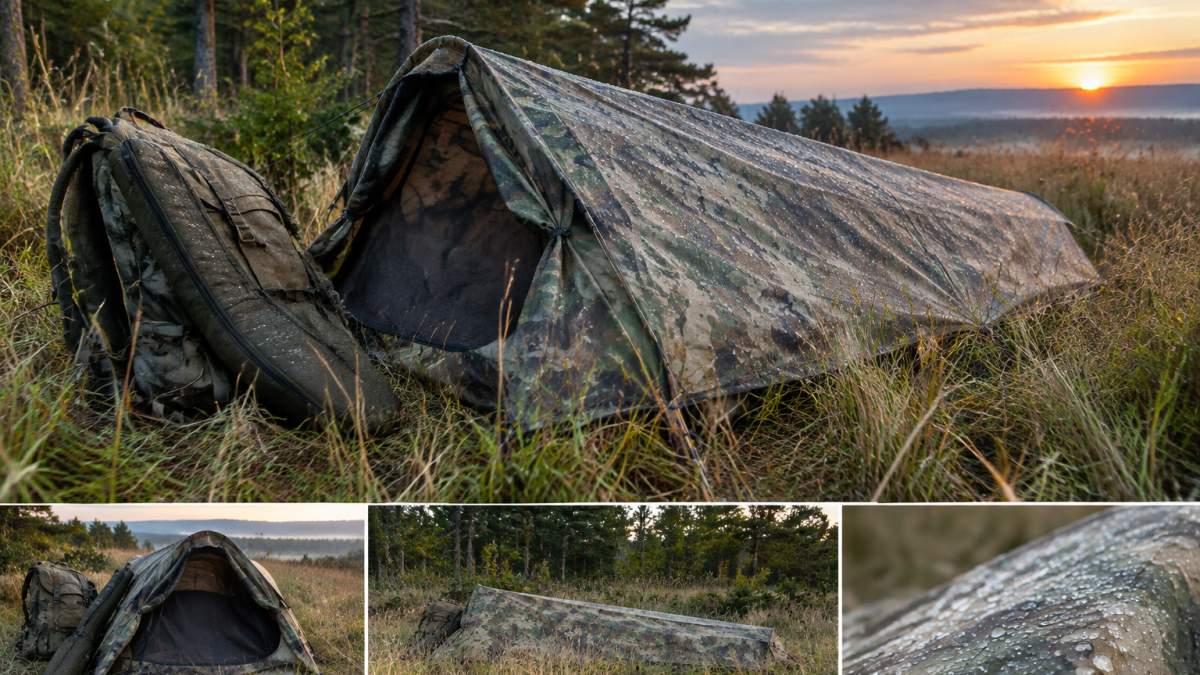
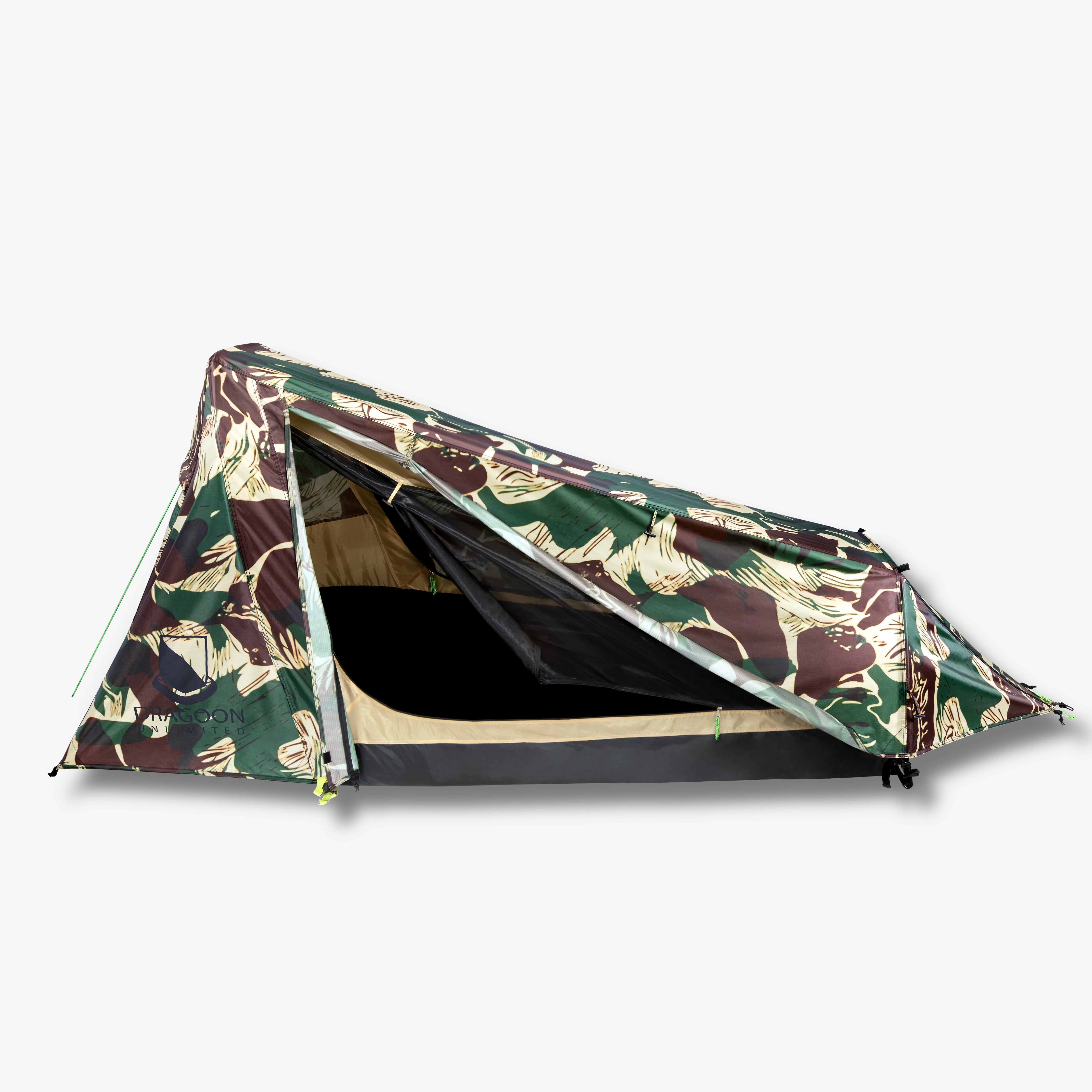
The Ridgeback is our one-person bivy tent. It is 90 inches long, 40 to 42 inches high, and 40 inches at the shoulders. Total weight is 4 lb 9 oz, and it rolls to 5 by 18 inches with two aluminum poles and 16 stakes.
What works:
- Room to move. The length is the point. You can stretch out and keep a pack at your feet.
- Weather protection. UV-resistant ripstop, taped seams, and a bathtub floor.
- Fast setup. Color-coded webbing goes up quickly in low light or bad weather.
- Two shelters in one. The inner tent stands alone as a screened shelter for warm nights.
- Packs light. Rolls to 5 by 18 inches.
Best for: hunt camp, the bug-out bag, and overland rigs where you want a real shelter fast. Skip if: you are chasing the lightest possible pack and will trade headroom for grams.
You can see the pattern and specs on the Ridgeback Bivy Tent in Rhodesian Brushstroke page.
Woobies and Poncho Liners: The Gear Veterans Already Trust
Ask any veteran what piece of gear they kept, and the poncho liner comes up fast. The woobie is a water-resistant liner that works as a blanket, a sleeping bag liner, or a serape. It is not waterproof.
Our zippered poncho liners add a three-sided zipper that turns the blanket into a sleeping bag, a zippered headport for wearing it as a serape, and 82 by 60 inches of coverage. Each ships with a storage carry bag and head pad.
Patterns matter to people who care about heritage. The Trooper wears MultiCam/OCP, the standard of the modern soldier. The Trail Rider honors the original olive drab. The Fire Force wears Rhodesian Brushstroke, a pattern with history in every stroke.
Where it earns its keep:
- Hunt camp. Lay it flat as a blanket, zip it into a bag when the temperature drops.
- Overland rig. A serape for a cold morning at the tailgate.
- Bug-out bag. Packs small and does several jobs.
Browse the full lineup on our poncho liners collection and pick your pattern.
Upland Hunting Vest Setup: Getting the Hatari Right
A good upland vest setup is about access, not capacity. You want shells where your hand falls, water within reach, and a game bag that does not swing when you turn.
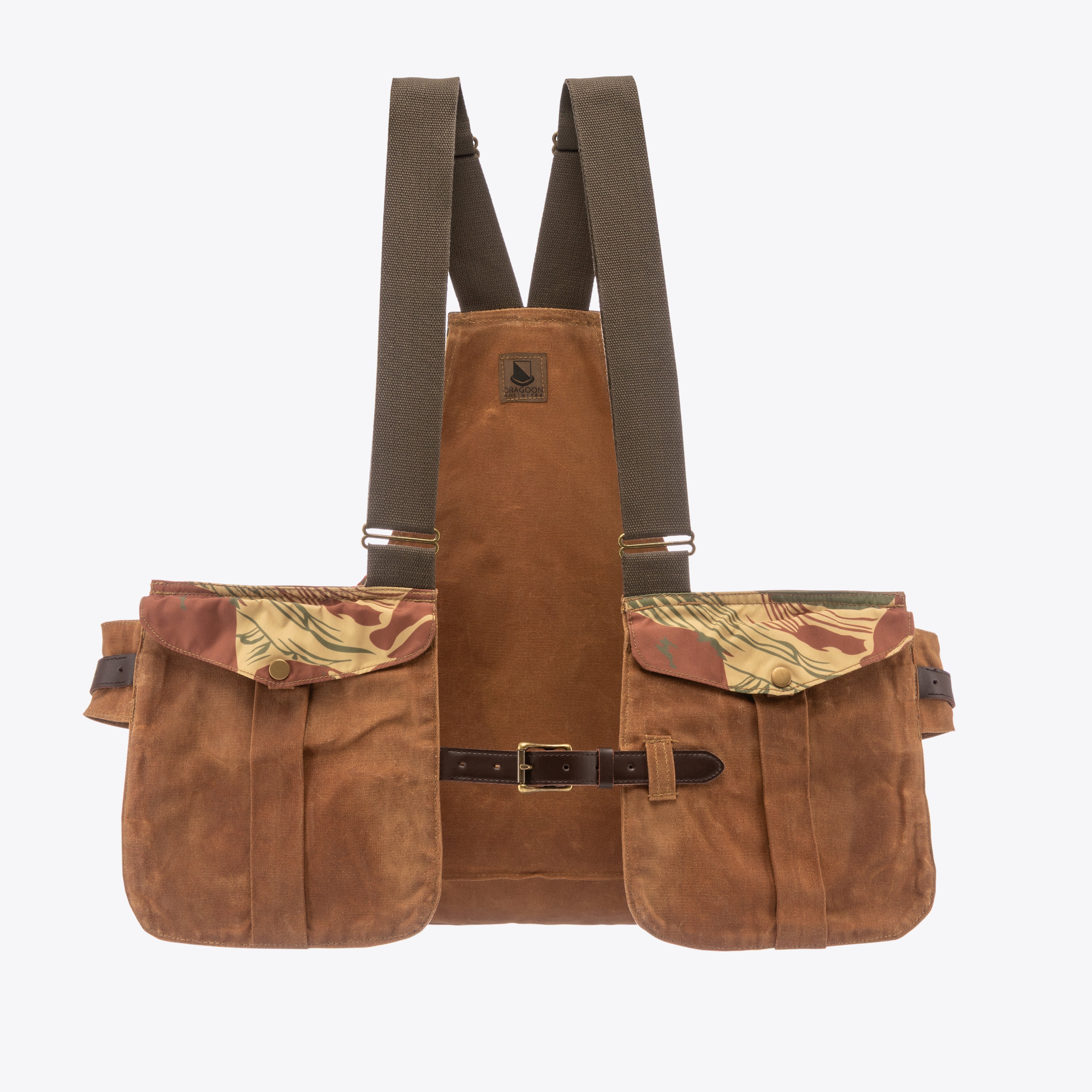
The Hatari is our waxed-canvas upland hunting vest. Set it up in this order:
- Shell loops first. Load the gauge you carry, front rows, so a reload is one motion.
- Water on the back or side. A full bottle is the heaviest thing you carry; keep it close to your spine.
- Game bag last. Leave it empty and roomy. A tight bag ruins birds.
- Trim the rest. If you did not use it last season, it does not go back in.
Watch out: overloading the front pockets. A vest that sags forward throws off your swing and your shoulders by midday.
Waxed canvas needs care to stay useful. Brush off mud when it dries, re-wax the wear points each season, and never machine wash it. To see the features and order the setup, visit the Hatari Upland Vest in Rhodesian Brushstroke page.
Outdoor Gear Military Discount: What Veterans Should Ask Before Buying
An outdoor gear military discount is only as good as the terms behind it. Most programs look the same on the landing page and behave very differently at checkout.
Start with eligibility, because that is where most veterans get surprised.
On verification, most programs route you through a third-party service that confirms service records against government and commercial databases.
On savings, compare the discounted price to the everyday price, not to MSRP. A discount off an inflated list price is not savings.
On value, this is where a military-grade claim deserves scrutiny. If you want a straight take on whether military-grade pricing is justified before you spend, read our breakdown of military grade gear worth the cost.
A word on stacking. Many programs will not combine a discount with a seasonal sale, and some will not apply it to already-reduced items. Ask before you build a cart around a code.
Our own answer is simple: 5% of all sales goes back to organizations making a difference in our world.
Building Your Kit: What to Buy First from Dragoon Unlimited
Build in the order you will actually use the gear. Shelter first, insulation second, then the activity-specific pieces.
| Priority | Item | Price | Why It Comes First |
|---|---|---|---|
| 1 | Ridgeback Bivy Tent | $129.99 | Shelter is the one thing you cannot improvise in bad weather |
| 2 | Zippered Poncho Liner | $69.99 | Insulation that doubles as a blanket and serape |
| 3 | Hatari Upland Vest | Field-specific | Only once you know your activity and loadout |
Start with the Ridgeback in Rhodesian Brushstroke or Emerald Green at $129.99. Add a zippered poncho liner at $69.99 in the pattern you want. Buy one piece at a time, use it, and let the kit grow around what you actually do.
Most gear reviews tell you what to buy. The harder question is what to carry when the weather turns and the truck is a mile back. We build gear for that night: shelters with room to move, liners that work as blanket and bag, and a vest set up for the field. Five percent of every sale goes back to organizations making a difference, and we stand behind what we make. Get started with Dragoon Unlimited and build a kit that earns its place in the bag.
Frequently Asked Questions
What outdoor gear companies are veteran-owned?
Plenty of brands claim veteran ties, so check who actually designs and field-tests the gear. Dragoon Unlimited was founded by a former Army cavalry officer, and it designs and field-tests its own gear. The company also sends 5% of all sales to organizations making a difference. Look for that kind of concrete detail, not just a flag on the homepage.
What should you look for when choosing a one-person shelter?
Start with length and headroom, because most one-person tents are cut for smaller frames. The Ridgeback runs 90 inches long with 40 to 42 inches of height and 40 inches at the shoulders, so you and your gear fit inside. Then check weather protection: UV-resistant ripstop, taped seams, and a bathtub floor. Color-coded webbing goes up quickly in low light. Finally, weigh the packed size: 4 lb 9 oz rolling to 5 by 18 inches.
What outdoor gear discounts are available to veterans?
Discount programs vary widely by brand, and the details change, so verify current terms directly with each company before you count on a percentage. What's worth more than a one-time discount is a brand that builds veteran support into every purchase. Dragoon Unlimited puts 5% of all sales toward organizations making a difference. Ask any brand how the discount is verified and what happens to your data.
How can you tell whether outdoor gear is suitable for field use?
Look for specifics instead of adjectives. Real field gear lists dimensions, weight, materials, and setup details, like the Ridgeback's two aluminum poles and 16 stakes or the poncho liner's three-sided zipper and zippered headport. Ask whether the company tests its own products and whether the design came from customer feedback.
What should you pack for a cold night at camp?
A poncho liner earns its place in almost any pack. The zippered woobies from Dragoon Unlimited open flat as a blanket, zip into a sleeping bag or bivy cover, and wear as a serape when the wind picks up. Coverage runs 82 by 60 inches, and each one packs into a storage bag with a head pad.


