


Table of Contents
- What Is a Woobie and Why It Matters for Cold Weather
- Thermal Efficiency and Temperature Ratings Explained
- Poncho Liner vs Sleeping Bag: Which Works Better for Your Setup
- How to Use a Woobie for Camping: Layering and Field Techniques
- Woobie vs Wool Blanket: Durability, Weight, and Performance
- Weight, Packability, and Field Versatility
- Maintenance and Long-Term Care for Your Woobie
- Frequently Asked Questions
Last Updated: October 2, 2026
What Is a Woobie and Why It Matters for Cold Weather
A woobie is a lightweight, multi-purpose insulated blanket originally designed as a military poncho liner. The polyester batting construction provides thermal regulation without excessive weight, combining portability with thermal efficiency for cold weather camping and survival situations.
The woobie's polyester batting traps air and maintains warmth even when damp, unlike traditional sleeping bags that lose performance in moisture-heavy conditions. This makes it invaluable for backpackers and hunters where gear weight and packability directly impact movement through challenging terrain.
Why use a woobie for cold weather camping comes down to versatility and reliability. You can layer it as a sleeping bag liner, wrap it around yourself as a poncho, use it as an emergency shelter, or integrate it into a modern sleep system with a quilt. This flexibility means one piece of gear handles multiple roles, reducing overall pack weight while increasing your options when conditions change unexpectedly.
Dragoon Unlimited's Trail Rider and Reforger poncho liners exemplify field-tested woobie design, built with water-resistant polyester and zippered configurations that allow you to convert them from blankets into functional sleeping systems. The three-sided zipper design gives you control over how much insulation you need, whether you're layering over a sleeping bag or using it standalone in milder conditions.

Thermal Efficiency and Temperature Ratings Explained
A woobie's polyester batting provides consistent loft, the air pockets that trap warmth, across its entire surface, unlike some insulation materials that compress unevenly. Loft directly determines thermal performance at a given weight.
A standard military-grade woobie handles temperatures down to around 50 degrees Fahrenheit when used alone, but when layered with a sleeping bag or quilt, effective temperature ratings can drop another 15-20 degrees.
Synthetic insulation doesn't absorb water like down does, so your woobie maintains insulating properties in damp conditions. A traditional down sleeping bag loses significant thermal value when wet; a woobie's polyester batting continues performing.
When evaluating why use a woobie for cold weather camping from a thermal standpoint, consider that the material's thermal regulation properties work best as part of a layering system. The woobie acts as a mid-layer insulation component, working with your base layers and outer shell to create comprehensive temperature control. This is fundamentally different from relying on a single sleeping bag to handle all thermal demands.
Poncho Liner vs Sleeping Bag: Which Works Better for Your Setup
The comparison comes down to flexibility versus specialization. A sleeping bag provides one complete thermal system for sleeping, while a woobie excels at multiple tasks but may not match a specialized sleeping bag's single-purpose performance.
A traditional sleeping bag provides a complete enclosed system with advanced baffles that prevent cold spots and heat loss. If your primary goal is maximum warmth in the most compact form, a premium sleeping bag delivers that.
A woobie poncho liner offers advantages a sleeping bag cannot match: the three-sided zipper allows partial opening for ventilation, you can wear it while moving through camp, use it as emergency shelter, or layer it with other gear. A sleeping bag locks you into a single configuration.
For cold weather camping, the woobie's versatility is critical. If you're moving between camps or facing unpredictable weather, adjusting insulation on the fly prevents overheating during activity and maintains warmth during rest. A sleeping bag forces you to choose: stay inside and overheat, or step outside and lose all insulation.
A sleeping bag is superior for stationary winter camping. A woobie is superior for active cold weather missions where you need warmth while moving and adapting to changing conditions. Many experienced campers use both.
| Feature | Woobie Poncho Liner | Traditional Sleeping Bag |
|---|---|---|
| Versatility | Wearable, shelter, insulation layer, liner | Single-purpose sleep system |
| Packability | Compact stuff sack, minimal bulk | Bulkier when packed |
| Temperature Adjustment | Zippered sides allow partial opening | Enclosed design limits adjustment |
| Active Use | Excellent for movement and activity | Best for stationary sleep |
| Layering Integration | Designed to work with other systems | Typically standalone |
| Moisture Management | Synthetic material resists water absorption | Down loses performance when wet |
How to Use a Woobie for Camping: Layering and Field Techniques
Why use a woobie for cold weather camping becomes obvious when you understand proper layering techniques. The fundamental principle is creating an insulation sandwich: base layer against your skin, the woobie as your primary insulation, and an outer shell to block wind and moisture. This system gives you control over each component independently.
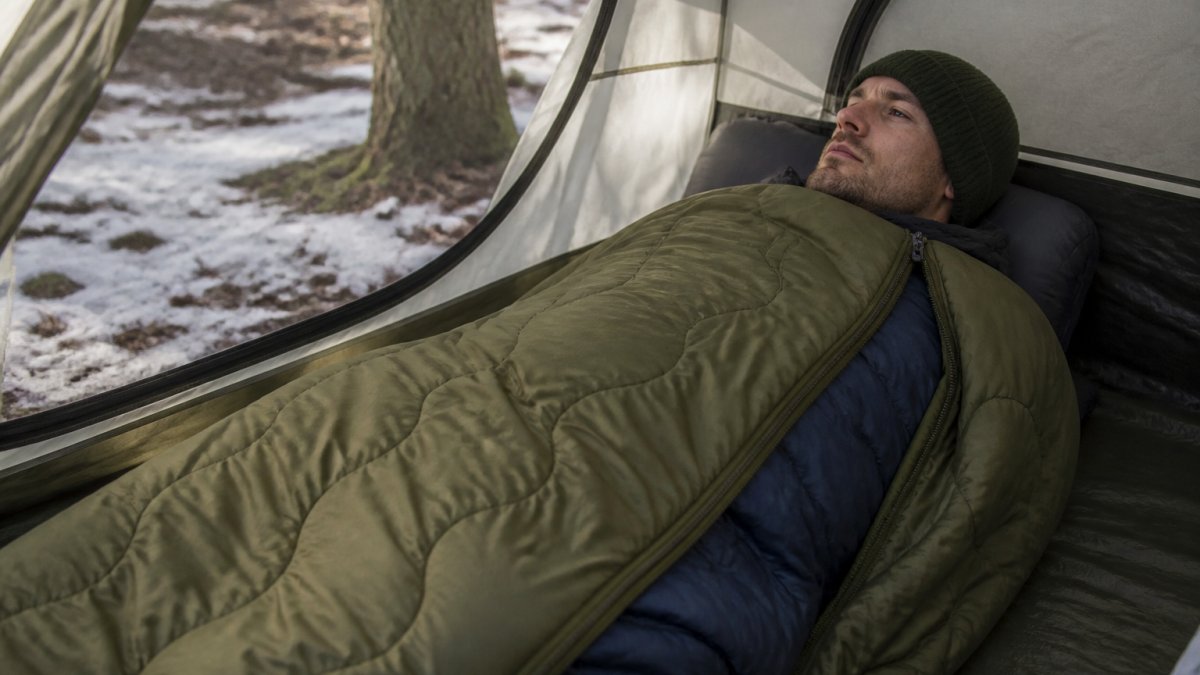
Lay your woobie flat on your sleeping pad. Many campers use it as a liner inside their sleeping bag to add insulation and protect from dirt and moisture. The zippered configuration allows you to position the head port over your head while the three-sided zipper runs down one side and across the bottom, giving you ventilation options or complete sealing.
“Trail Rider™ Olive Drab 3-Sided Zippered Poncho Liner with Headport, Stuff →
For active camping, wear the woobie as a poncho over your layers. The head port slides over your head and the rectangular design drapes like a serape, keeping you warm while maintaining mobility. Once you stop moving, convert it into a sleep configuration by laying it flat and using the zipper to create an enclosed space.
Combine a woobie with a quilt or lightweight sleeping bag to create a custom sleep system. Lay your quilt as base insulation, then drape the woobie over it. The synthetic material doesn't compress underlying insulation, letting you adjust warmth by adding or removing the woobie.
Dragoon Unlimited's Reforger and Trail Rider models include a comfort head pad for critical heat-loss zones. The stuff sack compresses the woobie into a compact bundle, and the zippered headport design allows precise positioning for maximum efficiency.

Woobie vs Wool Blanket: Durability, Weight, and Performance
A wool blanket offers genuine warmth and excellent insulation properties, but comes with significant trade-offs in weight, packability, and maintenance compared to a woobie.
Wool maintains thermal performance when wet, unlike down. However, a quality wool blanket weighs 3-5 pounds versus a woobie's 1.5-2.5 pounds. For backpacking where every ounce matters, this weight difference becomes critical over long distances.
Durability favors the woobie. Wool blankets are susceptible to moth damage, require careful storage, and develop odors if not properly dried. A woobie's polyester construction is virtually indestructible, resists tearing, doesn't attract pests, and handles rough treatment without degradation.
Packability strongly favors the woobie. A wool blanket compresses only so far, while a woobie stuffs into a compact sack. This space savings translates directly to carrying capacity for food, water, or other essential gear.
Maintenance favors the woobie. Wool requires careful drying and protection from insects. A woobie can be stuffed wet and dried later without damage, doesn't develop odors, and requires only basic rinsing.
The performance comparison in actual cold weather use shows both materials work, but woobies adapt better to dynamic field conditions. A wool blanket is excellent for stationary camps where you can manage its bulk and maintenance requirements.
Weight, Packability, and Field Versatility
A woobie typically weighs 1.5-2.5 pounds, making it practical to carry on ultralight backpacking trips while providing genuine thermal value.
Maintenance and Long-Term Care for Your Woobie
Proper maintenance ensures your woobie remains functional and reliable for years of field use. The synthetic polyester construction is inherently low-maintenance compared to wool or down alternatives, but specific care practices extend its lifespan and maintain thermal performance.
Frequently Asked Questions
How warm will a woobie keep you in freezing temperatures?
A woobie's warmth depends on how you layer it. Used alone, it provides lightweight insulation suitable for mild cold. Layered over a sleeping bag or used as part of a sleep system with a base layer, it significantly boosts thermal efficiency in freezing conditions. The synthetic polyester batting traps body heat effectively, and the water-resistant shell prevents heat loss from moisture. For true cold weather (below 20°F), combine your woobie with a quality sleeping bag rather than relying on it solo.
What makes a woobie different from a standard camping blanket?
A woobie is engineered specifically for field use with features standard blankets lack. The three-sided zipper converts it into a bivy-style sleeping bag, the zippered head port creates a neck seal for heat retention, and the water-resistant polyester shell sheds wind and moisture. The included stuff sack makes it packable for bug-out bags and overland rigs. Standard blankets lack this versatility, thermal engineering, and durability for harsh environments.
Can a woobie be used as a sleeping bag liner for extra warmth?
Yes, and this is one of the woobie's best applications for cold weather camping. Placed inside your sleeping bag, it creates an additional insulation layer that traps body heat and reduces condensation buildup. This layering approach is especially effective in freezing conditions and extends your sleeping bag's effective temperature rating by 10-15°F. The moisture-wicking properties help manage condensation that forms in tight sleep systems.
Why do veterans and outdoor enthusiasts swear by the woobie?
The woobie's reputation comes from proven field performance across decades of military and civilian use. It delivers multiple functions in one compact piece: emergency shelter, sleep system component, poncho insert, and survival blanket. Veterans appreciate its durability, reliability when conditions get rough, and the confidence it provides in backcountry situations. For outdoor enthusiasts, the combination of thermal efficiency, packability, and versatility makes it indispensable for cold weather missions where gear weight and space matter.


